Showing posts with label Great White Egret. Show all posts

Friday, 21 October 2011

A Couple of Days

Bird News: Ibsley Water - great white egret 1 (the usual bird on both Wed and Thurs.), yellow-legged gull up to 6 (mostly adults or near adults), "white-winged" gull 1 (apparently adult reported on Thurs afternoon, but identity uncertain) , dunlin 1, goosander 5+, crossbill 1+ (reported Wed), brambling 1 (reported Wed).
Ivy Lake - water rail 2+, Cetti's warbler 1 (singing).
The last couple of nights have been much colder, resulting in our first grass frosts of the season and the moth catch reduced to zero. The misty mornings have made for some atmospheric views over the lakes though, the shot below is of Ivy Lake on Thursday as I opened up the Ivy South hide.
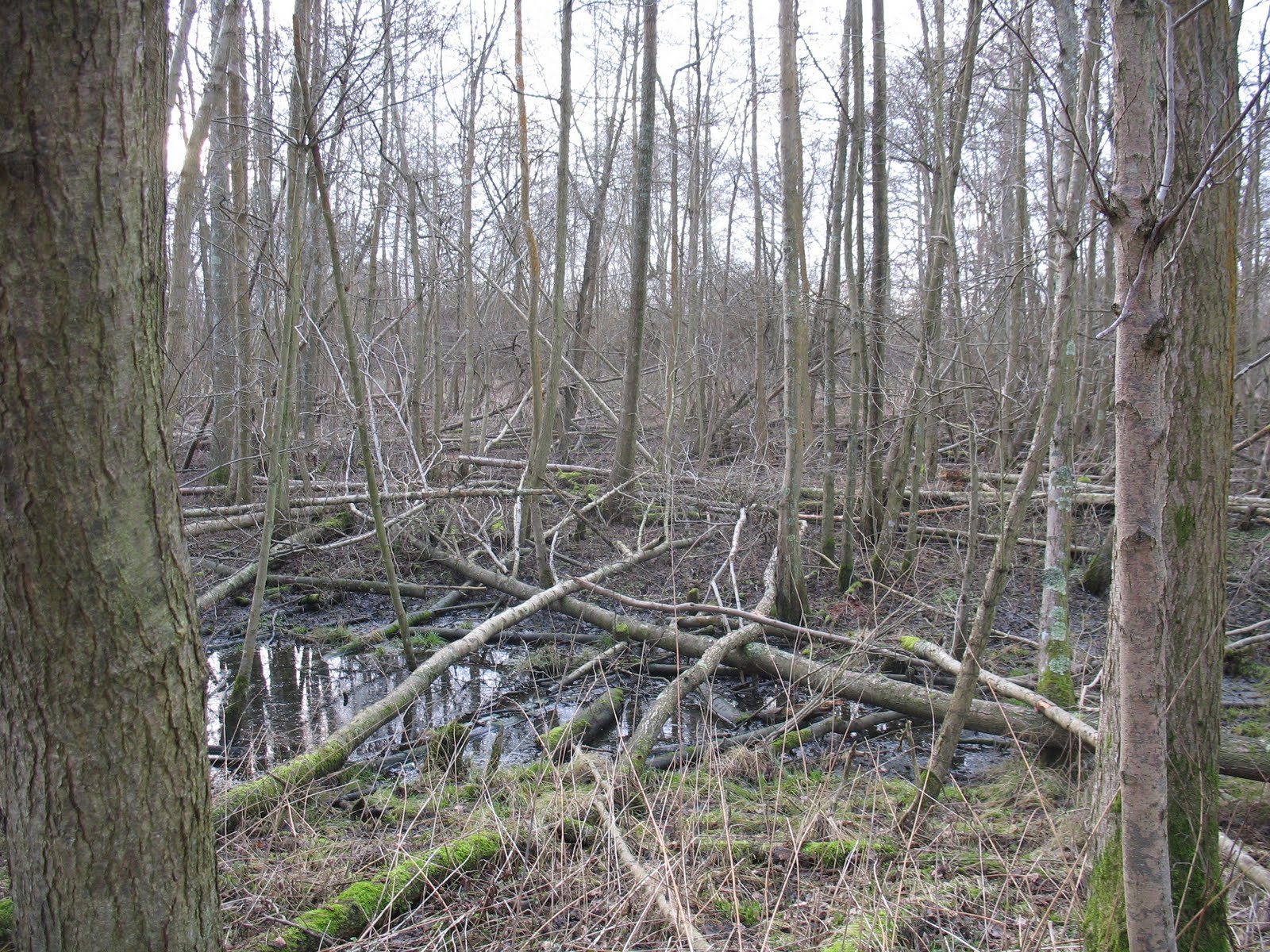
The same morning I kept running into roe deer. A doe with two youngsters was in the alder carr near the Woodland hide, along with a young buck. The doe and youngsters were running in circles and passed me twice without obviously seeing me. One, or possibly both of the youngsters were making a very odd squeaking sound, unlike anything I have ever heard from roe before. In the poor light I failed to get a picture of these deer, but at the Ivy North hide I came across the young buck again, this time with another doe and her two youngsters. Although the light was poor I managed a "digi-bin" shot of three of the group. Although the buck seems to have seen me they did not move off and I left them there. At the same time a very bushy-tailed fox trotted through the group, moving towards Rockford Lake.
Although the days started misty and cold, this quickly gave way to clear blue skies and a good bit of sunshine, especially on Wednesday.
These conditions favoured a movement of birds overhead, with crossbill, brambling, skylark, meadow pipit and siskin all on the move in small numbers. Siskin look like arriving in large numbers this winter, there are already flocks of fifty plus about the reserve as the alder cones open to reveal their seeds.A close up view of the alder branches shows that the sausage-shaped male catkins are already there and ready to open in the early spring as soon as the conditions are favourable. The cones in this shot are just starting to open.
Thursday was volunteer day and we set about some of the large laurel bushes planted years ago to screen the gravel works. Unfortunately most of the plantings along the western side of Ellingham Lake were of miscellaneous alien species, with just a few natives. Plants such as the laurel swamp and shade out native species and we hope to encourage the growth of some of the hawthorns and others that are hanging on in their shadow. Below is a picture of one such large bush just as we started.
Then what was left at the end of the task. We may have to come back when the branches have dried out and burn some up as there is a lot of material left. This shot also shows that laurel are far from the only alien species planted, a variety of conifer trees and other garden shrubs also got included and it will take many years to remove these and get them replaced with more desirable native species.
On both days the great white egret made quite lengthy appearances on Ibsley Water stood with the grey herons on the small island near the northern shore.

Monday, 17 October 2011

Ducks and Deer and Spots

Bird News: Ibsley Water - redwing 13 over west with 4 blackbirds, yellow-legged gull 1 adult, green sandpiper 1.
Mockbeggar Lake - great white egret 1, little egret 7.
The main task today was to do the wildfowl count for the month. The day started misty, which delayed me a bit, then the sun came out and conditions were excellent, until it started to rain and the wind picked up. Ibsley Water held the greatest number of birds, including 1027 coot, 104 gadwall and 202 wigeon. As well as the greatest numbers Ibsley water also usually has the greatest diversity of species. In the picture there are five, coot, mute swan, wigeon, teal and mallard.
It was not all birds though, on my way to count Mockbeggar Lake I came across a small group of fallow deer, including a very pale fawn young buck and an almost white adult buck, unfortunately I only got a picture of a typically coloured doe, just as it spotted me and dashed off.
I am sure I have noted before that Blashford is of special importance for the large population of gadwall that winter here, approximately 2% of the Western European population last winter. I did not see all that many today but a few of them were showing well in the early sunshine like the pair below doing their daily toilet outside the Tern hide.
The drake above and the duck below both displayed their white speculum, in the duck especially, this readily separates them from the many other similar ducks.
A particular feature of the sycamore trees this autumn has been many blackish spots on the turning leaves. It is something called tar spot fungus and attacks sycamores and maples, specifically it is Rhytisma acerinum.
If the predictions of rapidly deteriorating weather are correct we may not see too many insects this year, so a few red admiral, migrant hawker and common darter dragonflies were good to see. Usually I expect to see all of them into mid-November, but such things are never guaranteed.

Monday, 26 September 2011

Violet and the Beauty

Bird News: Ibsley Water - common tern 1 juvenile (morning only), ringed plover 1 juvenile, ruff 1 juvenile (still), swallow c180, house martin c40, black tern 1 juvenile (later in the day), great white egret 1 (the usual bird seen near the Lapwing hide pm.), wheatear 1.
Centre - lesser redpoll 1+ over calling, siskin 50+.
The moth trap was quite busy, but when I lifted the trap to go through it I noticed a fine violet ground beetle that had been hiding underneath.
Twenty-three species of moths was a good haul and it included the first spruce carpet of the year, a migrant rusty-dotted pearl and this bordered beauty.
Another, that I think is the first this year was L-album wainscot pictured below. This used to be a rare migrant, but it became established in Devon about eighty years ago and has spread along the south coast. The next few days look very promising for migrant moths, with warm conditions arriving from the continent, I have high hopes.
The trap still attracts a range of other insects as well, there are usually several caddis-flies, beetles and a few bugs. Forest bug is the most frequent, closely followed by birch bug, but today there was another Pantilius tunicatus which I do not remember seeing before.
As the season has moved on the sand martins, so much in evidence a week ago are pretty much all gone now. There are still house martins, but now swallows are the most numerous, not long ago I found it hard to pick any out in the swarms of martins. A feature of this autumn has been the number of siskins, for at least two weeks they have been flying over on most days and there are about fifty in the alders now. It seems they are having a bumper year with record numbers recorded on passage at more northern sites already, despite their migration usually peaking several weeks later than this in a typical year. Perhaps it is going to be a mega-finch winter.

Saturday, 10 September 2011

Knot Makes Swift Return, with Breadmaking

Bird News: Ibsley Water - about 3000 martins, mainly sand martins over the lake and house martins over the trees, 1 swift, 3 dunlin, 1 knot, 1 ringed plover sp (too far to be sure), 1 hobby.
Ivy Lake - great white egret (the usual colour-ringed bird), 1 Cetti's warbler.
We were busy pretty much all day with a group of visitors from National Parks around the country. They were all volunteers from a project called MOSAIC which aims to encourage access to the countryside and especially National Parks by people who do not usually visit. We did a short walk, pond-dipping, looked through the moth trap and finished up with fire lighting and "bread" making. Actually some of the bread was really good, especially the bits flavoured with blackberries.
Hopefully they all saw something in the work we do at Blashford that they could take home, even if Blashford is not quite as challenging as the high Peaks or Northumbrian Fells. As they were cooking I found the robber-fly below resting on the upturned wheel barrow, that is why the background is such a fierce yellow.
Birds today were just at the start and finish of the day for me. The martins were again over Iblsey Water and as I locked up I once again found a single swift. Reported were 3 dunlin and a knot, I assume this is one of the two that were about for several days last week. I also spotted a single juvenile "ringed" plover, it was right up at the north end of the lake seen from the Tern hide, it was moving like a little ringed plover, but I could not say for sure. Also as we locked up the great white egret was on Ivy Lake, this was the first time I had seen it since it first returned in July! A singing Cetti's warbler in the Ivy silt pond completed the day, although this bird was there yesterday, but I forgot to include it in the blog.

Sunday, 21 August 2011

Reports and Captures

I have not actully been at Blashford today but I thought I would share a few reports that have come my way. The great white egret was on the silt pond behind the Lapwing hide and a black tern was on Ibsley Water.
I have also been sent the pictures below from the ringers who have been in twice this weekend catching something like 140 birds including good numbers of willow warblers, which are passing through in some numbers just now and two sparrowhawks.
A single lesser whitethroat was agood catch as they are not at all common on the reserve.
Two juvenile bullfinches will have been reared locally and prove breeding in the area.

Friday, 11 February 2011

First Moths, a Shrike and the Rockford Two

After meaning to run the moth trap several times, I finally remembered yesterday and was rewarded with three moths. A single male pale brindled beauty, males of most species are far more frequent at moth traps than females. In the case of pale brindled beauty it is only males that ever come to the light as the females are flightless.
The other two moths were both chestnut, a common species that emerges as an adult in the autumn and over-winters, flying on mild nights and then more regularly in spring, surviving until April or May.
Most of the more sought after birds on the reserve seem to have collected on Ivy Lake. From the Ivy North hide a bittern was again present and the great white egret put in appearance again this afternoon. Out on the lake both of the smew, the "Rockford Two" were to be seen, although at times fishing under the over-hanging trees and so very difficult to locate. I had thought that the egret had gone, by usual standards it is staying very late this year and it was not reported at all yesterday.
After opening the hides I walked back along the path between the Dockens Water and Ellingham Lake, a good idea as it turned out as the great grey shrike was in the trees beside the Dockens just behind the Education Centre, it flew off south down the side of Ellingham Lake. It is usual to think of these shrikes being on open heath and perched in bushes or very small trees, but perhaps this is just where we can see them easily, this bird seems to be quite often in the tree tops and perhaps this is not as unusual as might be thought.
I went to the Woodland hide around the middle of the day and the brambling were very fine, at least sixty were feeding all around the hide. I have one of the feeders on camera in the lobby at the Centre and it is a great sight at times. We hope to have some clips from this camera for the website soon.

Wednesday, 9 February 2011

Early Morning Aigrettes

When I went to the Ivy North hide to open up I found the great white egret fishing in the channel just in front of the hide. Although the light was poor I decided to try and get a few pictures. It was just possible to angle the telescope to view through the side window, so I could see the bird, all I had to do then was set the camera so that the action of the bird was stilled and the contrast did not lead to the white plumage flaring. I took sixty odd shots and got three half decent ones, two of which are below. It is now in breeding plumage and has the long aigrettes, which are the long wispy plumes that grow down the back. Unlike little egret or grey heron they do not have head plumes.The aigrettes were much used in the Victorian and Edwardian fashion trade to adorn ladies hats. The head feathers of great crested grebe were also used as were many exotic species, especially humming-birds, the trade in which resulted in the import of hundreds of thousands of tiny corpses, sometimes used whole to "fly" around a hat. The excesses of this trade in feathers lead directly to the start of what in time became the RSPB. Before I left the hide I checked to the left in case the bittern was there and there it was, also fishing, although it slunk off into the vegetation, so even if the light had allowed there was no chance of a picture.

The 2 smew were reported from Rockford Lake again today, although the young drake flew over to Ivy Lake and was still there at the end of the day when I went over to lift a stranded mute swan over the fence on the Rockford path. The swans get stuck here because they land on Ivy Lake and get chased off by the very aggressive cob, if they do not have the wit to fly off they end up forced off the lake and so stuck on the path, unable to get through the fence onto Rockford Lake. There was also a report of 2 black-necked grebe on Ivy Lake this afternoon, but despite having a pretty good look I could not find them.

At the very end of the day I went to the Goosander hide to count the goosander roost, at least 155 came in, along with the female red-breasted merganser.

Thursday, 3 February 2011

Too Good to Burn

A day which started misty with ice on the ground cleared to pleasantly warm sunshine. The "Volunteer Thursday" magic had worked again. Once again today we were clearing scrubby willow from the old silt pond where we plan to make a series of small ponds for the Million Ponds Project and refurbishing the sand martin bank. When we clear trees and with the dense growth of scrubby willows and extensive areas of unmanaged landscape plantings we have to clear quiet a bit, we never burn up the brash. This is not laziness it is because dead wood is a valuable resource.
The reserve has very little dead wood habitat, not surprising as most of the woodland is very young, one of the few areas with a lot is in the alder carr south of the Centre where many trees have succumbed to phytophora disease. Dead trees harbour lots of life, the larvae of beetles are often eaters of wood and in turn get eaten by birds such as woodpeckers. Dead wood in water is favoured by lots of fly larvae and there are specialists that eat certain types of tree or diameter of branch.
The tops of cut trees provide lots of small diameter twigs and branches, as well as being food, these can be used to create dead hedges, providing low dense cover, used by nesting birds and as cover to avoid predators. They are also popular with reptiles and amphibians.
A dead hedge does not last long, the small branches breakdown in a couple of years or so, but in this time they can provide support for brambles to grow through and so make a more permanent habitat, especially popular with nesting birds. A bramble hedge also makes a great barrier and is cheaper, more effective and longer lasting than a fence.
I saw rather little today, using a chainsaw and spending too long in the office does not make for good wildlife sightings. That said I did see a bittern as I opened the Ivy North hide. The reserve was very busy though and lots of other people did see all sorts of wildlife. The great white egret was on Ivy Lake for much of the day and bittern was seen on and off all day, both the egret and bittern were seen catching fish, in both cases they looked like rudd or roach. Over on Rockford Lake at least one smew was seen and best of all a lesser spotted woodpecker was found by the volunteers as they walked along the Dockens Water path to the worksite for the morning task.

Tuesday, 1 February 2011

Ibsley Gives a Bow

It was fine when I arrived at Blashford this morning, the sky was largely clear and the sun was rising. So I was surprised to see a "rainbow" over Ibsley Water as I opened the gate to the car park. I got a picture of part of it and just in time as it lasted only a minute or two. It seems the low sun as it rose was being refracted by the moist air enough to produce a rainbow effect even though there was no rain. With the sun so low the bow was arches high into the sky forming an almost full semi-circle.
The bird feeders were low and when I went to the shed I found that I needed to get more of almost everything, a trip to the feed suppliers was called for. Three sacks of assorted birdfood cost over £100! It was the recent rise in the price of peanuts that really put up the bill, luckily we do not use too many of these so hopefully I will not need more before the end of the winter.

After a damp morning, the moisture in the air first thing portended drizzle for a good while later on, eventually out came the sun so I took the chance to count the birds on Rockford Lake. As well as the usual ducks there was a single black-tailed godwit feeding on the bank nearest the path and it peered warily at me as I passed.Although there are still good numbers of wildfowl on the lake the population has dropped markedly since last week. The 2 smew were still there as were several hundred gadwall and at least 8 goldeneye. The great white egret was fishing along the western shore throughout my count and I got a couple of pictures. It was using the little egret style foot shaking method to flush fish out of the weed, something I don't think I have ever seen a grey heron doing.
I was counting for about an hour and by the end the sun was quite low this resulted in a stark contrast between the white bird and the dark water made more interesting by the reflections off the water.
At the end of the day I went to the Goosander hide to count the goosander roost. I watched until it got dark and when I totalled up the count it came to exactly 200, which just sounds like an estimate! Once again I was helped out by a fox walking the shore of the lake. The birds that had been out of sight round the corner all followed it and so allowed themselves to be counted. I also saw 7 white-fronted goose that flew in with a flock of greylag which also included the bar-headed goose. As it got dark the 2 smew flew in, although they made several circuits before eventually landing near the long shingle spit to the west of the hide. The female red-breasted merganser is also still roosting with the goosander.
Although there were a good few gulls I could see no sign of the first winter ring-billed gull reported recently and last seen on Saturday. I understand the mealy redpoll was seen again yesterday and 2 bittern were seen again today.

Sunday, 26 September 2010

Pink-footed Goose and a Feeding Frenzy

A bit of a photofest today, not that I set out with that in mind. The day started with a flock of 60 or so shoveler flying across onto Ibsley Water from Mockbeggar Lake, a sure sign of there being people on the bank. I went round for a quick look and there was a car parked up, no sign of anyone and no tracks in the dew so probably anglers, so they would keep whilst I opened up the hides. From the Ivy North the roe deer were just top the west of the hide and a quick look in the hide book showed a report of long-eared owl seen yesterday, no details, just written in with "coot" and "egret", if there really was one it would be a reserve "first".

Then it was time to go over to Mockbeggar and track down the anglers, there were five of them and they had evidently spent the night fishing. There were no birds on the lake but as I walked back I flushed a woodlark from a small patch of grass, the first I have seen on the reserve this year.

A look round other parts of the reserve proved most productive. From the screen along the Rockford path I had a good view of the three young great crested grebe, now quite well grown. I saw one adult feeding a small pike to one of the young.
Back to the Centre via the Tern hide and the greylag geese out on the lake included a smaller bird, a pink-footed goose. Now this might be an escaped bird, but over the last two days there have been several reported at various unusual places, my guess is they have been displaced in the prevailing northerly winds just as lots have been arriving from the north. So my bet would be that it is a real wild bird. The best picture I got was not great but with wings raised you can tell, if you are in the know, that it really is a pink-footed goose.
There was also a remarkable number of fish eating birds around the lake today. A peregrine landed on the favourite cormorant island displacing the birds, allowing me to count them, there were an amazing 260! Added to this disturbance on neighbouring lakes had resulted in most if not all of the grey herons in the area having collected on Ibsley Water, I could not count them quite so well, but there were at least 120. Lots of fish eaters on a lake with lots of fish, well you can guess what might happen next.
The cormorants started to fly into the small bay just east of the Tern hide, they were driving a shoal of fish into the narrow inlet. The herons noticed and began to gather on the shore, a feeding frenzy had begun. In the next ten minutes or so about 100 cormorant, at least 24 grey heron, a little egret and the great white egret were involved. When it finished the cormorants all came out onto the shore to dry off. The three pictures below show things just after the start, during the feeding and the last as things ended.
Several of the cormorants have got fish in the above shot.
Above we have both egrets, a grey heron, cormorants and attendant gulls. As the cormorants drive the fish into the bay they come within range of the herons, avoiding the herons meant going back into deeper water and the cormorants.
Nothing better than a spot of sun to round off a good meal, the heron had just landed, it was not drying out.
At lunchtime I emptied the moth trap, it was a very thin catch, the only species were: sallow, pink-barred sallow, lunar underwing, brindled green and frosted orange. One of the frosted orange was especially fine and I got a fair picture of it.
Although there was a cold wind it was quite warm in the sunshine and there was a red admiral and several common darter about. The darters were perching on the picnic tables and I got a close up shot of one of them.
I had noticed that despite our several volunteer days pulling Himalayan balsam there were still a scatter of plants along the Dockens Water, so I took a walk along the stream and pulled what I could find. Most were either very small plants or ones that were bitten off by deer and "pollarded" easily missed when pulling plants in July, but now reaching flowering. If we get an early frost they might never set seed, but an Indian summer and they will so I was not taking any chances. It is an attractive plant but a real menace, spreading and taking over from native species. It is the fact that it is attractive that is the secret of much of the spread, people like it and so plant it in their gardens, it then escapes and colonises new ground.
At the end of the day there was a dunlin right in front of the Tern hide, a juvenile and a long-billed one at that. The few new grey winter plumage feathers can be seen dotted about amongst the pale fringed juveline ones. A second dunlin was also out on one of the islands well up the lake.
Other birds today included at least one white wagtail, a hobby, 4 pochard, an adult yellow-legged gull and 3 Egyptian goose. A further Egyptian goose and 2 pochard were on Rockford Lake.

Tuesday, 21 September 2010

A Perch for a Gull

I did not arrive on site until lunchtime today as I had to attend a meeting in the morning. I had a quick look from the Tern hide when I arrived and The great white egret was standing on the north shore of the lake. In addition there were probably over 30 grey heron and at least 2 little egret. Later I was briefly in the Goosander hide where 3 goosander were the first for some time, probably locally bred birds from the valley and all juveniles as far as I could see. Other birds on Ibsley Water today included a bar-headed goose with the hundreds of greylag, 7 Egyptian geese and a peregrine.

Elsewhere on the reserve Jim and Michelle found yet another goat moth larva and a southern hawker dragonfly flew into the Centre lobby, I eventually caught it in the kitchen! When I went to lock up the Ivy North hide the roe deer were just to the east of the hide in the late afternoon sunshine and I managed to get one passable picture, although there was a little vegetation in the way.
Finally I went to lock up the Tern hide, the only extra bird I saw was a common sandpiper, but there was a cormorant struggling with a fish. A closer look showed it was a good sized perch, in fact so large was it that although it tried for something over ten minutes the bird could not swallow it, eventually the fish was abandoned and an adult great black-backed gull pulled it out of the water and eat a good part of it.

Monday, 20 September 2010

The Goat's Day Out

A fine, sunny, warm day and it really brought out the insects, there were butterflies and dragonflies and even quite a few damselflies. Rather more remarkably there were also goat moth caterpillars. Michelle found one during the morning, it seemed injured around the head, probably attacked by a predator, but why such a large and juicy food item would have been left was unclear. As it was not very active it did make an easy picture though.
They really are very large, probably 80mm (or three inches plus) long, these are full grown and wandering about looking for a place to make their cocoon. They feed on wood in the trunks of live trees and take several years to grow. They leave the tree and make a cocoon in which they spend the winter, only pupating in the late spring of the following year. During the afternoon Michelle found another caterpillar, this one dead and missing the head, then she found a very lively one marching over the ground. I went to have a look at this and found another predated one. So, all in all, four that we found all around the same group of willows. The curious thing about the predated ones was that none had been eaten despite looking like a good meal, it made me wonder if they are unpalatable in some way. I looked up this possibility but there seems to be no mention of it anywhere, so the mystery of why they should have been attacked but not eaten remains.

It was not a great day for birds, in that there were no new migrants about. The great white egret spent the afternoon on Iblsey Water along with 3 little egrets, 4 Egyptian geese and a common sandpiper. There was also a hobby hunting dragonflies and a peregrine perched on the long shingle spit.

Friday, 5 February 2010

Change for a Pound

A most surprising morning, when I opened up the Ivy North hide Cetti's Warbler was showing well and at the South hide there were 2 Green Sandpipers and all in very pleasant sunshine. I decided to walk back to the Centre the long way round via the Ellingham path and I'm pleased I did. When I got to Ellingham Pound there were the usual tiny number of birds, there is almost never anything of note on this pond, but they included a redhead Smew, possibly the one from Rockford Lake, or possibly not. I went to get a camera and got a few poor shots, although marginally better than my earlier efforts. However this was not the end of it, as I was taking the pictures a Great White Egret flew in, it was an unringed bird and did not stay long before a Grey Heron chased it off. Perhaps the Pound is turning over a new leaf, or perhaps this was it's purple patch and I just got lucky.
Over recent weeks there has been some bad feeling between photographers and general visitors in the Woodland hide. I decided to try an ease this by adding another feeder at the bend on the approach the hide, in a good sunny spot. Today I tried to get a few shots of Siskin and a couple are below, a male and a ringed female, possibly one of the birds ringed on the reserve recently.
The lichen covered branch is a decorative perch I added as being more interesting than either the feeder or the bare twigs of the neighbouring trees.
I spent most of the day moving willow brash to use on the banks around the main car park so did not see many birds for much of the day. However reports received, as they say, revealed that the, or a, Smew was on Rockford Lake and a Great White Egret was at Harbridge along with up to 18 Bewick's Swans. There was also a report of a male Marsh Harrier flying over, which I missed yet again, I seem destined never to see one at Blashford. Despite seeing no birds around the main car park I did make one observation of note, a Red Admiral, my first butterfly of the year.
At the end of the day I tried to get a Goosander count, however they had other ideas and I had to visit all three Ibsley Water hides, so would have missed some as they flew in. All the same the minimum number of birds present was 92, including 35 adult drakes. There were also at least 23 Goldeneye including 10 adult drakes.
I suspect the Red-crested Pochards have gone now as nobody reported them today, but there was a Bittern seen in the small patch of reeds north of the Goosander hide yesterday so the bird that has been around the eastern shore of Ibsley Water would seem still to be there.

Sunday, 17 January 2010

It don't make my Goldeneye Smew

I really should have had a better look at Ibsley Water first thing this morning, instead of the quick scan with binoculars that I actually did. Had I done so I would have seen a redhead Smew, I was sent a message about the bird, but by the time I looked it was long gone, flying off north. There were several Goldeneye, including this displaying group of 4 drakes and a single duck.
Whilst I was in the Tern hide a number of birds flew into the lake form the valley, the main birds involved were Wigeon and a flock of about 300 Black-tailed Godwit which landed on the spit to the east of the hide.
The day was marvellous with bright sunshine and feeling warm compared to recent days. The sun brought out the visitors, the car parks were effectively full for a short period in the late morning with almost 80 cars and probably twice that many people.

Despite the relative warmth many of the lakes still have extensive ice cover, although some like Ibsley Water and Ellingham Lake are almost ice free now. Ivy Lake has large numbers of wildfowl, many of which seem to delight in standing out on the ice rather than sitting on the water. These Mute Swans, Teal, Mallard, Gadwall and the duck Wigeon hiding behind the duck Mallard were on Ivy Lake.
Six species in one picture
A drake a two duck Gadwall taken from the SE screen on Ivy lake
A drake Tufted Duck, also from the same screen

Other wildfowl reported today included the 6 Red-crested Pochard still on Blashford Lake, although I did find a seventh today, a single duck on Ellingham Lake. At dusk there were over 100 Goosander in to roost on Ibsley Water, sadly with no sign of the Smew that had apparently roosted there last night. There was one last surprise though, a Curlew standing on the shore calling.
Meanwhile around the Woodland area there were a few Brambling and good numbers of Lesser Redpoll and lots of people looking at them. The feeders by the car park attracted two pairs of Collared Dove, not the rarest birds I know but I have never had much luck getting pictures of them, this one is not great but it is the best I have got.
There was also a deal of Egret action today, although none of it on the reserve. There were 2 Great White Egrets beside the River Avon at Harbridge, the usual ringed bird and a second unringed one. Things did get a bit confused though and at times there were claims that both of the birds at Harbridge were unringed and that a third bird was seen flying over Ibsley Water. For now I will go with the "Two bird theory". The usual 10 Bewick's Swans were there also and they had roosted on Ibsley Water overnight.