Showing posts with label volunteers. Show all posts

Friday, 21 October 2011

A Couple of Days

Bird News: Ibsley Water - great white egret 1 (the usual bird on both Wed and Thurs.), yellow-legged gull up to 6 (mostly adults or near adults), "white-winged" gull 1 (apparently adult reported on Thurs afternoon, but identity uncertain) , dunlin 1, goosander 5+, crossbill 1+ (reported Wed), brambling 1 (reported Wed).
Ivy Lake - water rail 2+, Cetti's warbler 1 (singing).
The last couple of nights have been much colder, resulting in our first grass frosts of the season and the moth catch reduced to zero. The misty mornings have made for some atmospheric views over the lakes though, the shot below is of Ivy Lake on Thursday as I opened up the Ivy South hide.
The same morning I kept running into roe deer. A doe with two youngsters was in the alder carr near the Woodland hide, along with a young buck. The doe and youngsters were running in circles and passed me twice without obviously seeing me. One, or possibly both of the youngsters were making a very odd squeaking sound, unlike anything I have ever heard from roe before. In the poor light I failed to get a picture of these deer, but at the Ivy North hide I came across the young buck again, this time with another doe and her two youngsters. Although the light was poor I managed a "digi-bin" shot of three of the group. Although the buck seems to have seen me they did not move off and I left them there. At the same time a very bushy-tailed fox trotted through the group, moving towards Rockford Lake.
Although the days started misty and cold, this quickly gave way to clear blue skies and a good bit of sunshine, especially on Wednesday.
These conditions favoured a movement of birds overhead, with crossbill, brambling, skylark, meadow pipit and siskin all on the move in small numbers. Siskin look like arriving in large numbers this winter, there are already flocks of fifty plus about the reserve as the alder cones open to reveal their seeds.A close up view of the alder branches shows that the sausage-shaped male catkins are already there and ready to open in the early spring as soon as the conditions are favourable. The cones in this shot are just starting to open.
Thursday was volunteer day and we set about some of the large laurel bushes planted years ago to screen the gravel works. Unfortunately most of the plantings along the western side of Ellingham Lake were of miscellaneous alien species, with just a few natives. Plants such as the laurel swamp and shade out native species and we hope to encourage the growth of some of the hawthorns and others that are hanging on in their shadow. Below is a picture of one such large bush just as we started.
Then what was left at the end of the task. We may have to come back when the branches have dried out and burn some up as there is a lot of material left. This shot also shows that laurel are far from the only alien species planted, a variety of conifer trees and other garden shrubs also got included and it will take many years to remove these and get them replaced with more desirable native species.
On both days the great white egret made quite lengthy appearances on Ibsley Water stood with the grey herons on the small island near the northern shore.

Tuesday, 18 October 2011

Clear(ed) View

Bird News: Iblsey Water - great white egret 1.
The bird news was a bit thin as I was working with the volunteers all day. Actually only two were ion but this was an ideal number for the tasks we had to do. Firstly we repaired the gate which had been damaged by whomsoever it was that used the reserve to get into the old block plant on Sunday night. The sooner this site is cleared the better it attracts break-ins with monotonous regularity and attendant damage to the access with broken padlocks, gates etc.
We then got down to clearing the view form the screen overlooking Mockbeggar Lake form the path to the Lapwing hide. Below is the "view" before we started.
Actually it is not really right to call it a view as you cannot see anything, However after we worked on it for a bit it became possible to see the lake again.
There is still scope for more clearance but we will be working on this lake during the winter so things will change quiet a bit in any case.
In the afternoon we relocated one of the web cams, it will be interesting to see what, if anything, it turns up.
At the end of the day I briefly saw the great white egret on Ibsley Water, where there were also rather more lesser black-backed gulls than I would have expected at such an early time. I may have another look at the roost tomorrow evening.
The occasional sunshine did tempt out a southern hawker dragonfly by the Centre pond at lunchtime and there were a few red admiral around again. Otherwise insects were few and the moth trap unremarkable after a rather cool night.

Tuesday, 27 September 2011

The View Opens Out

Bird News: Ibsley Water - wigeon 41, dunlin 1.
Ivy Lake - wigeon 21, Cetti's warbler 1, water rail 1+, kingfisher 2+.
Rockford Lake - black tern 1 juv. (reported).
The moth trap was busy even if the species were unremarkable, still I remain hopeful of good things in the next few days. There were several caddis-flies though, these are tricky to get pictures of as they are so flighty, but I did manage one shot, not sure of the species though.
Most of the day was spent working with four volunteers opening up sight-lines from Ivy North hide and putting some wood preservative on the hide. A bit more work to come on Thursday then we should be done in that area until next year. I will put up some before and after shots when we finish on Thursday, if it were not for the volunteers keeping any decent view from some of the hides would be difficult, plants will insist on growing!
I am pleased to say that both of the raft spiders are still present on the Centre pond, despite the nearest and largest, having been a bit alarmed by pond-dipping children on Sunday. It is not quite so close now but at least it is still there.

Friday, 16 September 2011

Flamingo!

Bird News: Ibsley Water - ringed plover 2 juvs., ruff 1 juv. and a greater flamingo which flew in at about 07:50 from the north-east, it has a blue ring on the right leg.
Ivy Lake - Cetti's warbler 1 singing.
General - a passage of swallows, house martins, sand martins, siskin and meadow pipit flying south or south west in small numbers through much of the morning.
The moth trap was quite busy although contained no surprises, 2 pink-barred sallow looked very fine though.
The volunteers were in again today and the willow clearance is going very well. Below are the before and after shots of the last couple of days work.
Unfortunately the shaddow conceals some of the effect.

Thursday, 1 September 2011

Thursday in Brief

Bird News: Ibsley Water a black-tailed godwit was the only new bird that I saw today and apart from an unattributed report of the great white egret the only thing of note.
Other News: good numbers of migrant hawker and brown hawker dragonflies around generally. A brimstone butterfly beside Mockbeggar Lake and 3 hedge rustic in the moth trap.
The volunteers made great headway with clearing the willows from the shore of Ivy Lake now that the water level is down. Normal Thursday morning weather prevailed and it was a good task all round, still lots to do, but we are getting there.
In the afternoon I moved the ponies across to Mockbeggar Lake shore as they have eaten off the grass on Ibsley Water now. Moving them now should give time for a bit of grass growth to give fresh feeding for wintering wildfowl later in the year.

Thursday, 21 July 2011

The Return of the Ragwortistas

Bird News: Very quite today, or perhaps it was just that I was not where the birds were. 2 shoveler near Ivy North hide were the first I have seen this "autumn", there was a teal there the other day, although I have not seen it since. At the Goosander hide the sand martins are giving great value, with loads of juveniles and at times a hundred or more clinging to the wall.

Other Wildlife: At the gate this morning a grey squirrel was in the hazel bushes, wasting the crop before it is ripe, or at least chewing the green nuts and dropping lots to the ground. We may, or may not, have dormice on site, but it we did they would do a lot better if the nuts were allowed to ripen.
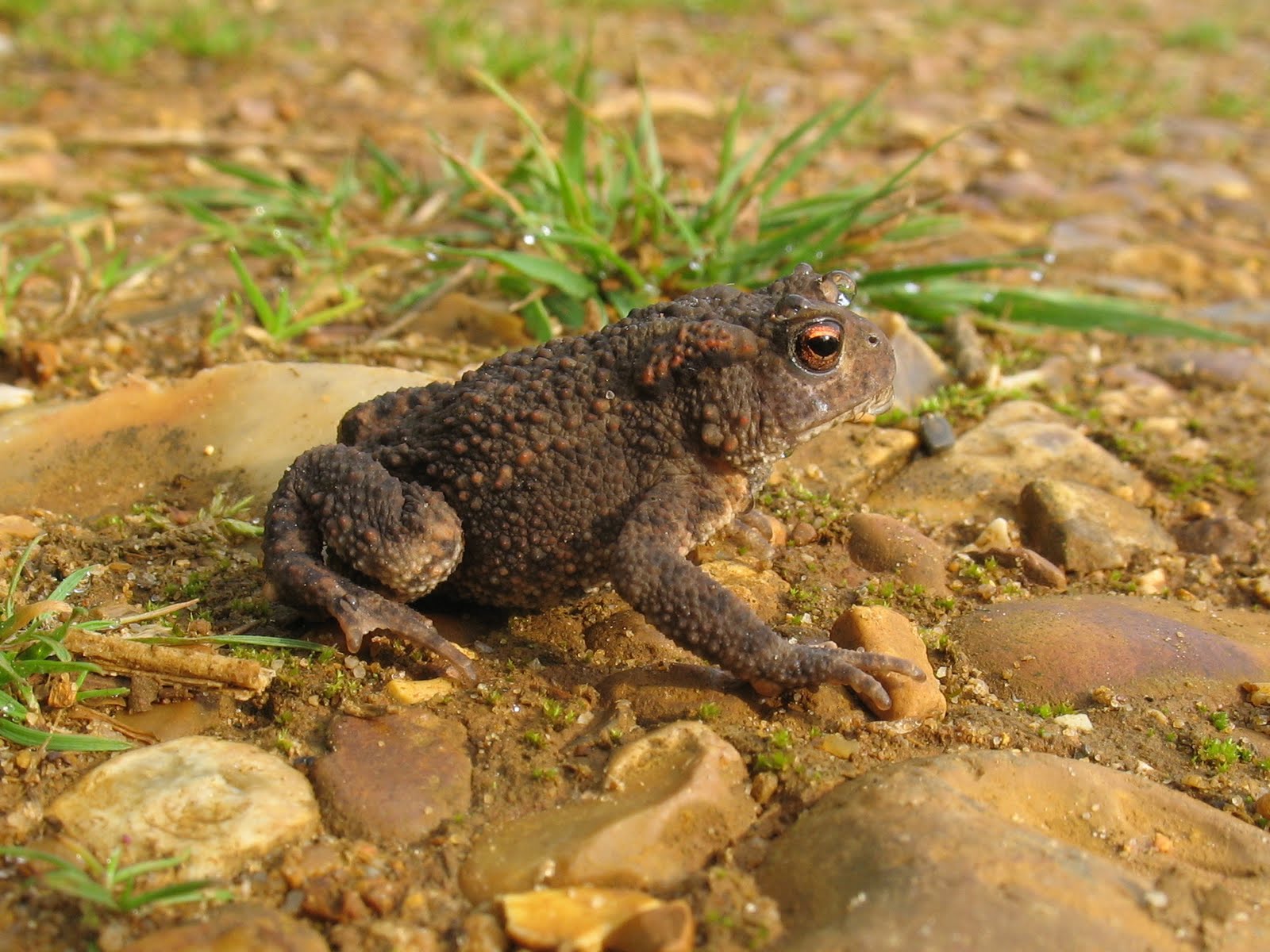
On the path near the Ivy north hide a small common toad was surveying the world, I moved it to one side in case someone trod on it.

Volunteers: The "Ragwortistas" were at work again today and what work they did. They got all the way up the eastern shore of Ibsley Water from just south of the Lapwing hide right round to the north-east corner. There is still the grassy spit to go, we could not get there earlier due to nesting lapwing, but they have finished now.

Above you can see the cleared foreground contrasting with the yellow background, it all looked the same when they started! Of course there is always the final plant to pull up.

Other Stuff: In the afternoon we checked some of the dormouse tubes put out in early spring, we found nine out of twelve, which was more than I expected, sadly there were no signs of dormice in any of them.

Thursday, 23 December 2010

A Bittern for Christmas

Very cold and fearfully icy, in fact I could not open the main car park as it was so treatcherous, the previously slushy snow has frozen into sharp ridges. I did open the Tern hide, although Ibsley Water is frozen over the whole of the southern end so there is little to see, except at great range.

Ivy Lake too is almost completely frozen and Rockford mostly so. Ivy has few birds other than mallard, but Rockford is well supplied with coot, gadwall, and mute swan, but not a great deal else. Ellingham Lake, as usual has large areas free of ice, but also largely free of birds, I always look in hope that some wandering wildfowl will have dropped in but they rarely do.

Most of the paths around the reserve are passable with care, they are icy and if you are visiting and have boot spikes they are well worth using. The car parks on the Center side of the reserve are usable, but icy and as I said above, the main car park is very icy and closed to cars and probably not worth walking across either.

It might be just before Christmas and it might be icy, but that did not put off the Blashford volunteers, six people turned out to make some more fat feeders to put out more of the "Biggest Fat Seed Cake in the World". We also cleared some of the ice from the ground at the Woodland hide to provide more feeding areas. After we had done this we stayed in the hide for a few minutes and in no time there were several brambling and lesser redpoll in on the feeders along with the commoner blue tit, great tit, coal tit, chaffinch, siskin, dunnock, robin, blackbird, great spotted woodpecker and nuthatch.

The bird news of the day came from the Ivy North hide where a bittern was seen in the late morning, once again the first bird of the winter has turned up in the week before Christmas. I did go to try and see it, failed but did see the female bearded tit, the male had also been seen, it is good to know they are still around.

Late in the day 2 Caspian gull were seen on Ibsley Water, both adults, although when I had looked earlier all I saw were about 5 or 6 yellow-legged gull and a peregrine, still maybe tomorrow...

Thursday, 16 December 2010

A Change in the Weather

I was delighted to see that large areas of the ice covering the lakes had broken up overnight. This is important as it means even if we are going into a new freeze at least there is s good area of open water at the start. It also allows the birds access to feeding areas denied for some time, when they are restricted they will deplete the food supply in the small open areas quite quickly. With luck if we get new freezing it will be to different areas, it also seems that the next period will be cold and windy, making it feel very cold, but the wind should help to keep the water open. As well as lots of water I also saw the party of 5 white-fronted goose on Iblsey Water before they flew out to the valley. At the end of the day just the juvenile was present, once again separated from the adults giving credence to the idea that it is not actually the off -spring of either of the adult pairs.

The forecast was not good for today, rain was predicted from quite early, however it was Thursday and so volunteer day and true to form we managed to work cutting rhododendron until just after midday before it started to rain. The ticket is almost all cut now, there is still a lot of tidying up to do but we are well on the way to getting rid of it.

With the Christmas break on the way I was trying to get some paperwork out of the way, to clear the way for our osprey platform and to create some new shallow pools. You might wonder what paperwork this would involve, but it seems that at least the first will need planning permission, so there is lots to do.

There was one report of note during the afternoon as the great grey shrike was seen in the main car park, it had prey of some sort and flew off with it towards the Goosander hide. Obviously a bird to look out for and if it is finding prey on the reserve perhaps it will be around regularly.

Thursday, 9 December 2010

Dormouse Mania and a Fatal Mistake

Yet another cold one, in fact I think the coldest so far, ice cover has increased everywhere. The reserve looked splendid in the sunshine with ice and frost covering reeds, trees and lichen heath. At the Ivy North hide I could hear a Cetti's warbler calling vigorously, although looking at the frost coated vegetation it is hard to imagine how and insect eating warbler survives. Needless to say there is only a small, coot covered patch of water left on Ivy Lake, right in the north-east corner.
The scene at Ivy South hide was brighter, just smooth ice and a clear sky.
I was interested to see how much water remained, so I looked at Ellingham Lake, which was ice free yesterday, it still had quite large areas of open water, but still not many birds, no more than fifty in all and mainly tufted duck and mallard. Then over to Rockford Lake, the sheer number of birds must have kept water open there. It had but the birds were now almost all either coot or mute swan, the thousand wigeon there at the start of the week had moved on.
The main event today was dormouse training, or more accurately training about dormice their habits and habitats. There is an old record of dormouse from Blashford Lakes and we are keen to see if they are still present. To do this we will put up nest-boxes and tubes and see if they are occupied next summer. Dormice are legally protected so there are rules to be followed if we find any, hence the training session. After an indoor introduction to the world of the dormouse we all and there were a lot of us, twenty-three volunteers and a number of Wildlife Trust staff, went out to put up some boxes. If enthusiasm is any predictor of success this could be our biggest hit project yet.
At the end of the day there were 4 white-fronted goose, all adults with the greylag on Ibsley Water, these were seen briefly yesterday when there was also a brent goose, a really good inland record and yet another species for the BTO Challenge total. The pair of bearded tit were also seen again yesterday and today from the Ivy North hide.
While we were in the Tern Hide a little grebe flew in and landed on the ice in front of the hide, obviously mistaking it for open water. A serious mistake as it has real difficulty walking on the ice and even more taking off. It pretty soon attracted a carrion crow and I thought it was as good as dead. It tried to run off, skittering over the ice, but the crow just flew after it and grabbed if, this happened a few times and they disappeared off to the left of the hide with a second crow joining in, surely this was the end. Then, amazingly it reappeared having pecked at the crows and escaped, possibly helped by coming close to the hide where the crows did not want to follow. It was hard not to feel that this plucky grebe deserved to survive. It now set off over the ice towards the nearest open water, at first heading towards a group of herring and lesser black-backed gull, perhaps a mistake, then it swerved away, but still towards the water, a good move. now well over half way to the water and a buzzard flew low over, took a look and landed on a post on the bank, perhaps it is not really interested after all. The grebe still progressing in short bursts, interspersed with brief rests on the ice, was now just twenty or so metres from the water and safety. It was then that the buzzard swooped in low, plucked the grebe from the ice and took it up onto the bank. Landing on the ice was a fatal error, the uncertainty turned out to be just what would deal the final blow.

Thursday, 25 November 2010

The Fire Starters

Another fine, if cold, Volunteer Thursday, today's tasks included clearing rhododendron. There is only one thicket of this plant on the reserve and we started to clear it last year and left it stacked. This was not laziness, the idea was to see if any of the original ground flora had survived before we burnt up the cuttings. Sadly it turns out the answer was no, which is a shame as this is one of the few areas of the reserve where the original ground surface remains. The massive size of the hazel stools testifies to a long standing woodland, but now without any ground cover plants, or it would seem surviving seed. We will still keep the fire sites small, just in case. I try to avoid having fires on reserves, the cut branches are habitat and a fire both sterilises the ground and produces a nutrient "hotspot". In this case the rhododendron is in huge quantity and is home to very little so the best way to restore the old woodland character is to get rid of it and after the fires to remove the ash. This was actually the first fire I have had on the reserve in four and a half years, the picture shows the fire in the early stage.
This was not the only task we did though, one of the signs at the entrance that had been bent by over exuberant driving on someone's part was replaced and two trailer loads of willow were added to the dead hedge around the main car park.

The cold wind following the overnight frost made looking out from the Tern hide less than pleasant first thing, in the quick look that I had I saw a green sandpiper and 3 black-tailed godwit. At the Ivy North hide the sheltered shallow water at the edge of the lake was frozen for the first time this winter, a calling Cetti's warbler was the only bird of note. Around the Centre feeders a brambling and a few lesser redpoll in the trees were about it.

Rather impressively, considering the overnight temperature, there were two moths in the trap, a December moth and a sprawler, unfortunately it was late in the day when I checked the trap so the picture of the sprawler below was taken in rather low light.


Thursday, 21 October 2010

Smoke on the Water

Properly cold this morning, in fact so cold that I could not really see anything from the Tern hide when I opened up. The lake was smoking a reflection of the sharp difference in temperature between the cold air and still warm water. There were a fair number of meadow pipit and pied wagtail feeding around the shore and a steady flight northwards of starling indicate that they are roosting somewhere to the south, perhaps in Ringwood town, I don't think they are in the Ivy Lake reedbed, but I would need to check at dusk proper to be sure.

When I crossed to Ivy Lake the air was already warming in the sunshine, still the frost was still thick on the reeds and reedmace in front of the Ivy North hide.
Beside the paths the brambles were heavily frosted as flocks of small birds moved through them. The number so goldcrest around is especially striking, especially as last winter seemed to knock back number so much. I did hear one or two chiffchaff, although they will be moving on soon. Although they do winter at Blashford, the wintering birds do not seem to be the autumn ones staying on. Usually few if any can be found in November until the last days when the bird that stay the winter turn up.
At Ivy South I took another view, the last this year to have the tern rafts in, as the volunteer task today was to get them in, cleaned off and ashore for the winter. I was intending to get some shots of the work but I was in the boat all morning and never got the chance.
There was no sign of the garganey today, although there were many fewer teal today on Ivy Lake as well. I heard of no other birds of note and saw none myself. I did hear some redwing near the Centre, but the trees blocked them from view. There was also a calling Cetti's warbler by the pond next to the path leading to the Ivy South hide, my first there this winter.

Friday, 15 October 2010

Island Life

More cutting along the shores of Ibsley Water today, making things better for grazing wildfowl and breeding waders. As well as cutting the shore two of the volunteer team went out to the island to give it a trim. This island is sometimes used by the big flock of black-tailed godwit that use the Avon Valley in the winter. Sometimes this flock can be as large as 3500 birds, a sizable part of the Icelandic population. The pictures show the island just after work started.
and what it looked like by the end of the morning.
Since I spent much of the morning using a strimmer and the afternoon various other machinery, bird sightings were few. The ruff was still on the islands in Ibsley Water first thing in the morning and I flushed a green sandpiper as I was transporting equipment up the shore of the lake later. I could see no sign of the scaup today, but it could still be around as I did not have a very good look. At the end of the day 2 wheatear were of note, both on the long shingle spit to the east of the Tern hide.

Sunday, 3 October 2010

Rain Fails to Stop Work or Cricket

This morning's rain stopped play at the Ryder Cup but it was not nearly enough to stop Blashford's volunteers. In fact we used the opportunity of the rain soaked tree branches to identify those that were most likely to bend down and reduce the headroom or the width of the paths. More or less as soon as we finished work the rain stopped, shortly after the sun came out, albeit briefly.

A wet night meant a cloudy night and that equals a warm night and a warm night means moths. Last night's catch included a beaded chestnut one of many "autumn only" species.
Another, although rather more common autumn species is the very variable lunar underwing, if you wonder why it has this name, it is because it has a crescent shaped mark on the hind-wing, although this is covered by the fore-wing when the moth is resting so you never really see it.
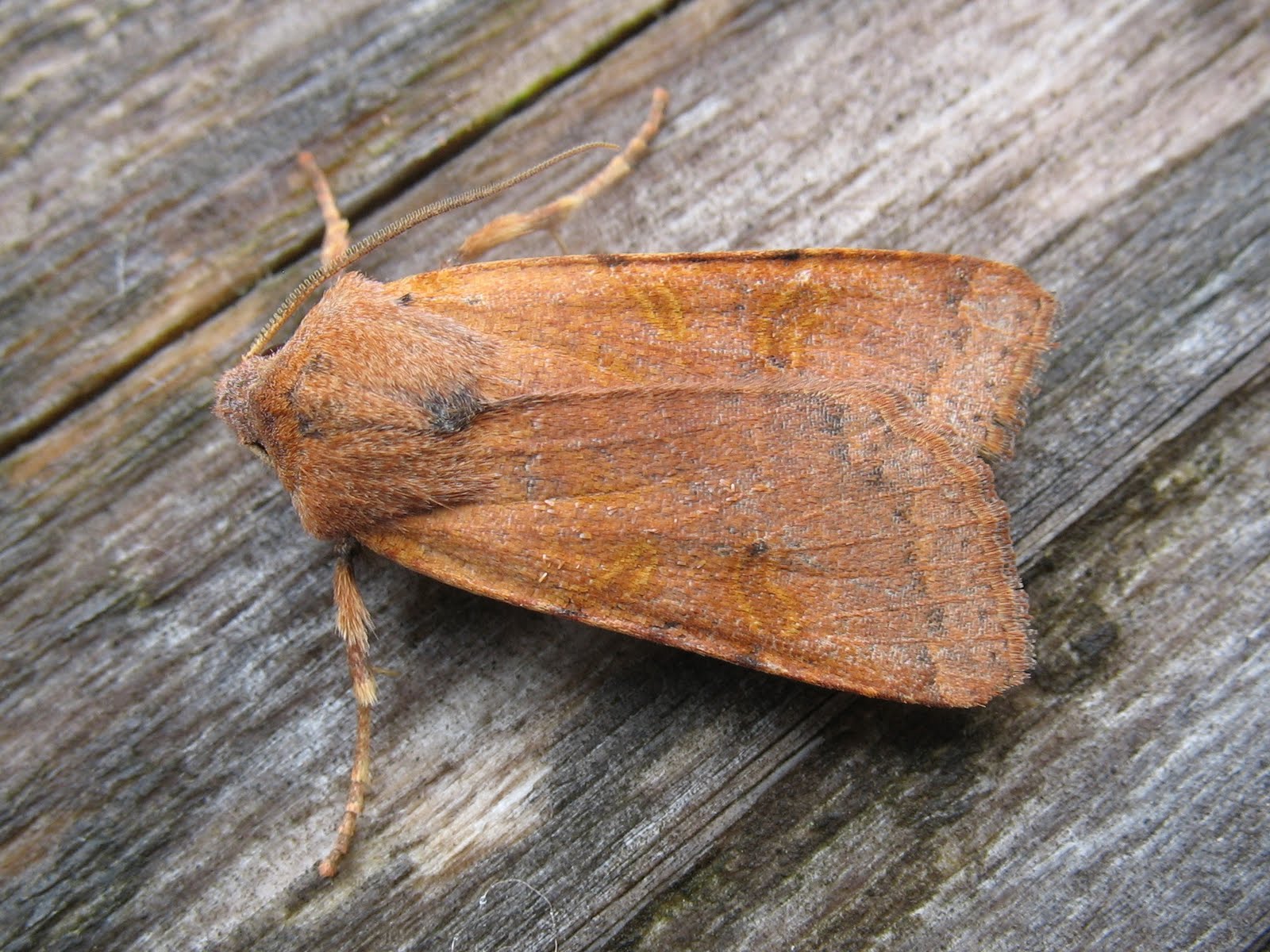
A lot of the autumn moths are orange or yellow, no doubt this camouflages them amongst autumn leaves, one such species is the sallow.
Some autumn flying moths have two broods a year. The setaceous Hebrew character is one of these, with a brood that fly in the mid-summer period and a second flying in the autumn.
Last of the moth picture from last night is a feathered thorn, it really doe shave feathery antennae, although this one refused to show them for the camera.
The early rain resulted in large numbers of swallows and martins feeding low over the lakes, today most were swallows, with perhaps 800 over Ibsley Water and Ivy Lake first thing. Numbers of martins were lower, but there were still about 50 sand martin and 200 house martin. Many of the house martin were not low over the water though, they seemed to prefer feeding around and just above the trees.
At lunchtime most of the swallows had dispersed as the weather improved. A visit to Tern hide to eat my sandwiches was largely quiet apart from 2 Egyptian geese and a little stint. The range was such that the stint was identified by probability, I suppose it could have been a semi-palmated sandpiper, well I can dream can't I?
I will end with another insect, one that I hear quite regularly during the summer but rarely see, despite searching. I have found the recent damp, mild mornings are just right for finding them, they are wood crickets. These are true crickets and chirrup softly in the leaf-litter, but the calls are hard to locate accurately and they stop if you get too close. However it seems they forage out on the shingle around the Centre on damp mornings and head back to shelter just about when I am covering the moth trap. Now that I had found where they were hiding I was able to find one and get a picture of it.
These are called "true-crickets" to distinguish them from bush-crickets. This species is quite common around the New Forest and was probably introduced into this country. We do have a native species in the field cricket, but this is so rare that it is the subject of special work to try and save it. The wood cricket may, or may not, be a native species, it was hardly noted before about a hundred and fifty years ago, perhaps it was much rarer for some reason or perhaps it was newly arrived with plants from the continent as gardening became more popular. The one in the picture is engaged in a little antennae cleaning.


Thursday, 16 September 2010

The Volunteer Effect

It was Thursday, so it was volunteer day. With the lake levels still quite low we took the chance to cut some more willows from the shore of Ivy Lake. The area we are cutting is one of the very few shallow flooded areas on the reserve, at least at winter water levels, so a rare habitat on the reserve. The willows have invaded and are drying the area out, so we are clearing them to restore a marsh/fen type habitat. The picture below shows the team a little while after we started work, when the lowest growth had already been removed.
And the effect of seventeen volunteers working for about an hour and a half was.....
The volunteers really do make a huge difference to the reserve, on my own I would hardly scratch the surface of large tasks like today's. Another example of their handiwork was the layering of the spindly willows between the Goosander and Lapwing hides. The upper picture shows them working on a cold January day last winter.
The same area just eight months on and there is now a low dense thicket of willow, great cover for small birds and well sheltered for insects. Layering the trees keeps the mass of the timber and the maturity but produces the low thicket that makes such good cover.
In other news, there were something over a thousand house martin gathered over Ibsley Water early on this morning, I had a look for potential red-rumped swallow, I have always hoped to pick one out, but failed again. Later in the day I gather one flew over Sway, not too far away, so my hope may not have been so fanciful. There were a few sand martin and a very few swallow as well. Rather more surprising was a group of 8 dunlin which flew over heading north, a couple of common sandpiper completed the picture.
At the Ivy North hide a juvenile sedge warbler was a nice sighting, other migrants seemed to be restricted to a few chiffchaff. I am due to do the first wildfowl count of the "winter" tomorrow so perhaps there will be more to report.

Thursday, 11 February 2010

A chill wind

Colder than ever today thanks to the stiff wind. Despite this there was a good turn out of volunteers with sixteen people turning out to do coppicing and dead-hedging, the hides also got a good sweep out. With spring coming we have perhaps two weeks left to finish the winter work, it is the same every year, in October the winter seems to stretch ahead giving lots of time to get a range of seasonal tasks completed, then from nowhere, it is mid February and the time is all but gone.

Another sign of the end of winter is the increase in the numbers of Chaffinches and Brambling visiting the feeding station at the Woodland hide. This is because the natural seed sources are now running out and birds wander in search of something to eat. Today I saw at least 15 Brambling and heard reports of more. I got a quick picture of a female and missed getting one of a very smart male that already has an almost completely black head. Although there were perhaps 200 birds feeding there a Sparrowhawk which dashed through completely failed to catch anything, probably confused by the mass of potential targets.
Other wildlife today included the duck Red-crested Pochard still on Ellingham Pound and a Peregrine over Ibsley Water at the end of the day. As I locked up the Ivy South hide there were two pairs of Wigeon and Gadwall feeding just below the hide. Seeing them so close and together I realised how different they are in body shape, the Wigeon are remarkably round when viewed from above compared to the much longer bodied Gadwall.

Tuesday, 9 February 2010

Potholes no more

The big news at Blashford today was not of birds or beast and may not seem that big, if you don't go there often, but I assure you it is. The entrance track dried out enough for us to fill the potholes. Ok so this may not seem that big a deal, but I have been waiting to do this job since the autumn, thwarted constantly by rain or sometimes frost. Three of Blashford's finest (some of the Thursday volunteers forming a break-away Tuesday group) spent two hours breaking down the hard edges of the potholes so that the fill would bind better when the dumper loads of fill arrived not one of our usual conservation tasks but an invaluable job none the less. The picture below shows a sight I was beginning to think I was never going to see.
Despite all the excitement of gravel there were some birds. Ellingham Pound scored again, this time with a duck Red-crested Pochard, probably the last of the group influx from earlier in January. The Smew was seen again on Rockford Lake, although I did not see it on a brief look in the afternoon. Also reported were the 11 White-fronted Geese first seen on Sunday and again yesterday, today they apparently they flew in for a short time in mid morning with a party of Greylag. First thing this morning there were 2 Black-tailed Godwits on Ibsley Water, there have been thousands in the Avon Valley recently.

Around the Woodland hide and Centre good numbers Siskins, Lesser Redpolls and at least 6 Brambling were at the feeders.

At dusk I counted 2900 Black-headed Gulls at the Ibsley roost along with 50+ Common Gulls and perhaps 800 Lesser Black-backed Gulls.

Sunday, 7 February 2010

Geese and Gardeners

Another busy Sunday at Blashford, two visiting groups, one a coach party and it was volunteer day as well. The volunteers spent the morning working in the area around the Education Centre, particularly the garden area near the new shelter. The aim is to establish a new area for wildlife gardening next to the shelter, hopefully one that will not need to be fenced against the rabbits, so we are going to have to pick the plants with care.

Birds today included the Smew still on Rockford Lake, a Red-crested Pochard of Snails Lake and all the usual Brambling, Lesser Redpoll etc around the Woodland areas. After lunch I went over to the Tern hide, as I approached I realised I could hear geese calling and that they were not the usual Greylags but the laughing calls of White-fronted Geese. Eventually I found three birds dropping down onto the lake. On getting into the hide I could see there were eleven with a group of Greylags. The picture shows the whole group, with a Greylag, they did not stay long and flew off west at 14:40, they were not all adults, the initial group of three I saw were two adults and a juvenile and I think there were two or three more juveniles in the flock, although all had at least some "white-fronts". Below is another in a long line of iffy pics of Blashford birds, but at least they can be identified as White-fronts!
There was also another goose on the lake, a Bar-headed Goose, presumably the return of the regular, although the first time I have seen it this year.

Towards dusk I joined John Clark and Tim Doran who were doing a WeBS count today to carry out a co-ordinated count of the Goosander and Goldeneye on Ibsley Water. We ended up with 98 Goosander and 34 Goldeneye, the latter especially high as they usually peak in March.

Also reported today was a male Hen Harrier west over Ibsley Water. With more cold weather on the way and several reports of Bean Geese about the country today we will wait to see what the coming week brings.

Thursday, 14 January 2010

Volunteer task and bumper Common Gull count

Today was Thursday so it was volunteer day. Although the walk to the site uses up some of the time we had several jobs that needed doing around the Goosander hide area over beside Ibsley Water. We split the team up with some filling the new Sand Martin nesting pipes that will shortly go into the new section of wall, then cutting birch regrowth in the "Dozings" area just south fo the hide. Meanwhile the bulk of the team worked on laying over some tall willows beside the path to the Lapwing hide. These are a problem because they are prone to falling onto the path and they have grown so tall that their structure is no longer of great value to wildlife. The task involved cutting part the way through the stem and bending over the tree, when it works they stay growing and the fact that they are lain over one another keeps grazing deer away from the regrowth.
Above the work has just started, as well as laying over the smaller stems and thinning the standards to allow in more light. Below at the end of the session a low dense tangle that should go green with new growth in the spring diversifying the habitat in this area by introducing some low dense cover. It is also interesting to see just how much the remaining snow melted in the hour and a half between the pictures.
A quick look at some of the lakes today showed that ice cover is still considerable. On Ibsley Water about 50%, on Ivy Lake about 80% and similar on Rockford, slightly less on Blashford Lake at about 70%. The 6 Red-crested Pochard are still on Blashford Lake, bickering with the Coot over beakfuls of weed, there was also a single drake Ruddy Duck there.
At dusk on Ibsley Water the Tufted Duck count was a fair bit lower than last night at 204, however the Common Gull count was by far the highest I have ever recorded at 443.
Tomorrow we are doing a full count of all the lakes, so we will see what we find.


Thursday, 7 January 2010

Woodcock with ice

Opened up again today, getting there was not too bad apart from the last few hundred metres along Ellingham Drove. The main car park is too icy for cars so it is closed, but there are not huge numbers of visitors so the remaining car parking should be enough.

We actually did not get that much snow, but it is very cold, -8C last night. Surprisingly the lakes actually have less ice than they did on Tuesday, I think this is because the temperature did go up for a time during the snow and the wind also got up. Still it all looked very fine in the brilliant sunshine today, the Dockens Water (below) is still providing some open water for Little Egrets and Kingfishers, although it is iced over in places despite the flow.
Still very little sign of any birds having been displaced to Blashford, a Woodcock beside the boardwalk near Ivy South hide being one of the few. Around the feeders a couple of Brambling were good to see and the feeders are generally very busy, as might be expected. There was also a little overhead movement, mainly of Fieldfare and Skylark and mostly heading north, I think they were just confused.

Impressively three of the Thursday volunteers got to the reserve today, so we put in a couple of hours coppicing willows, it was actually very pleasant working in the sunshine this morning.

I'm not sure what the next few days will bring, it looks ok until Sunday, but the forecast then is for snow again, with more on Monday.