Friday, 8 October 2010

A Blashford "Tick"

It is always good to see an new bird and today I saw a new species for the Blashford reserve, at least the first record that I am aware of since the reserve really opened up. Sadly it was not some rarity from distant parts, but a red-legged partridge, probably a refugee from a nearby shoot. On the plus side I did manage to get a picture of it. The bird was running around the car park when I arrived this morning and when it got to the back of the hide it flew up onto the screen and then off to the east.
I saw nothing else of note from the Tern hide, although I know the great white egret was seen on Iblsey Water later in the day. On Ivy Lake the 4 mandarin duck were still around, they were feeding on insects that they were picking off the surface of the lake, making rapid dashes here and there to grab them. I was not aware they fed on insects and certainly not in this way.

The moth trap included a couple of migrants, a silver Y and a rush veneer, but not much else of note.

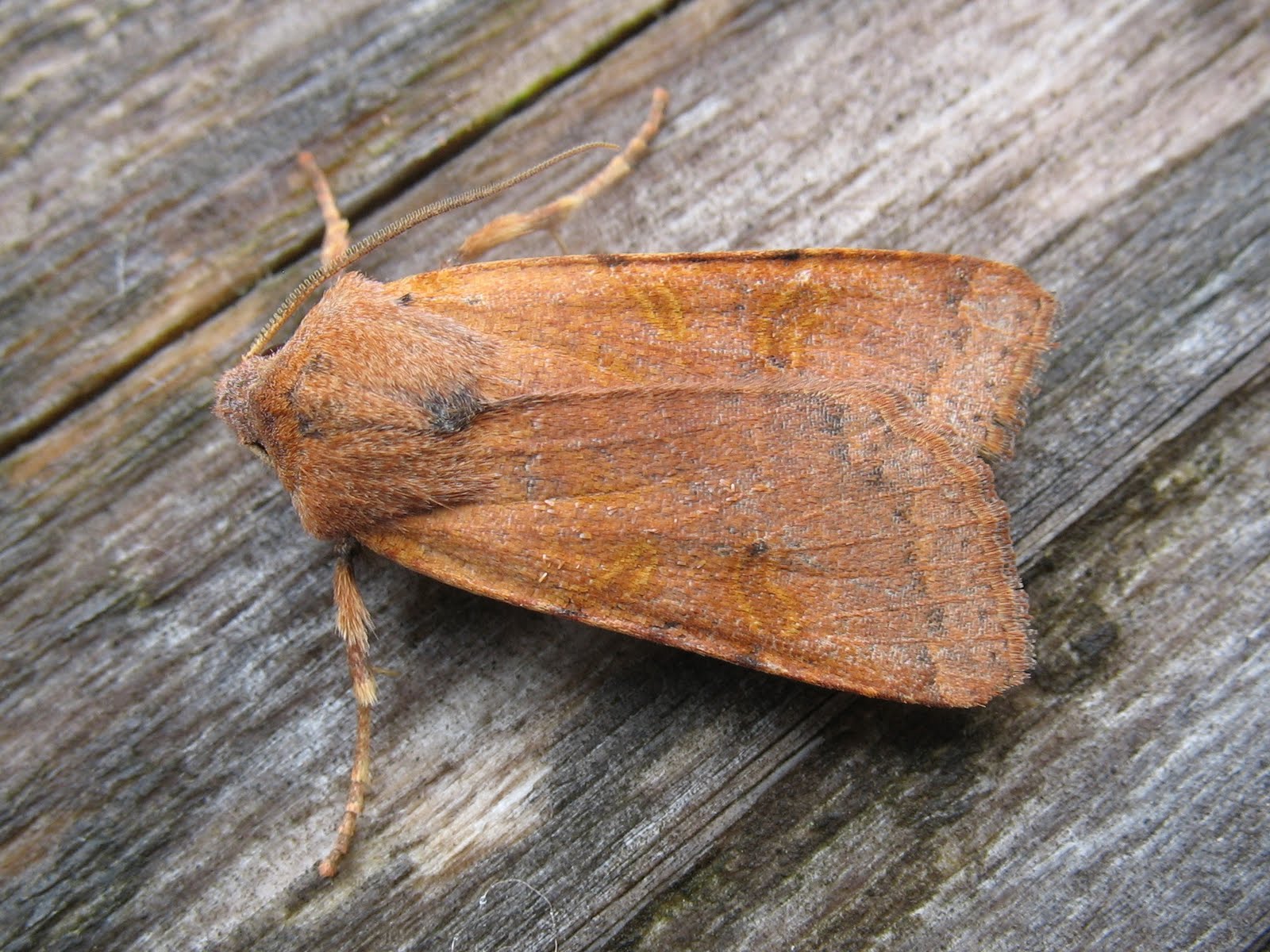
During the afternoon I continued cutting the sight line outside the Ivy North hide, it was very warm in the sunshine and I was being buzzed by migrant hawkers all the time. As I cut I disturbed several large wainscot moths, these feed on reed mace, so it was not surprising that there were there.

As I headed back to the Centre I flushed a small butterfly, it was a small copper, rather worn this late in the season but still bright.


Thursday, 7 October 2010

Busy and a Big Blue Hint of Things to Come?

No pictures and not a lot to report, there may have been things around but it was a very busy day. Volunteers in working during the morning, trimming willows and collecting plants for the rafts. All afternoon both Jim and I were busy with a Water Company conference group visit and of course we had to help eat some of the food provided for lunch, the trials of working at Blashford.

During lunch the sun had brought out a grass snake which was swimming in the pond behind the Centre, it could be the last one of the year, although with the temperatures predicted for the next few days I am sure they will be out and about for a while yet. During the afternoon we took the delegates on a guided walk, at the Goosander hide the great white egret was putting on a good show, there were also some goosander, appropriately enough.

Otherwise all I have to report is a couple of black-tailed godwit on Ibsley Water and 3 goosander flying out from the roost when I opened up first thing.

The next few days promise warm winds from the south, at this time of year that may not mean birds, but it could well produce migrant moths. Some of the most spectacular southern species can turn up at this time of year. By way of proof, when I got home and opened up my moth trap there was a Clifden nonpareil in it, this is a huge "underwing" moth, similar to, but larger than, a red underwing, but with black and blue hind wings. Perhaps it was a foretaste of things to come.

Wednesday, 6 October 2010

All Fours

A morning of fours, at the Tern hide first thing 4 Egyptian geese and 4 goosander flying out after roosting on the lake, than at the Ivy North, 4 mandarin duck.

A reasonable catch of moths included a satellite, new for the season. This is one of the species that emerges from a pupa in the autumn, flies for a while then hibernates and flies again in the spring. This means that they might survive as adult moths for well over six months. It gets the name from the small white dot that lies beside the larger orange spot on the wing, this larger spot is also sometimes white.
As well as moths there were several other insects including another species of burying beetle, this time an all black species called Necrodes littoralis. Actually this is not really a burying beetle in that it does not feed on buried carcases, or indeed bury them as many other species do.
There was also a spectacular parasitic wasp, Netelia testaceus, it is an ectoparasite of moth larvae. I was not able to coax it off the egg boxes in the trap, but this did mean that I got a rather good shadow as well as the wasp.
A cancelled meeting in the afternoon was actually an opportunity, I managed to make a start on cutting the sight lines through the reeds, well actually reedmace and reed sweet-grass. I actually got Jim and Michelle out of the office as well and they cut some of the willows that obscured the view and cleaned the outside of the windows. We are almost ready for the bitterns now, although today all we managed was to hear water rail calling.


There were not a lot of reports from around the reserve today, although the great white egret was again watched near the Goosander hide.

Tuesday, 5 October 2010

A Shakin' Fox, an Obvious Admiral and the Mandarins

Ibsley Water was pretty sparse first thing, a couple of little egret, a reasonable count of 131 shoveler and a common sandpiper was all I could find. A few swallow and a single sand martin flying over southward were the only hirundines.

The conditions are still good for fungi and I got pictures of a couple of unidentified groups in the area of the Woodland hide. One lot rather egg-like.
The other group more conventional, in fact these might be honey fungus, although they seemed rather small.
Returning to the Centre something caught my eye on a spurge plant, a closer look showed it to be a caterpillar preparing to pupate. I looked later in the day to see it it had progressed, but it had gone, I suspect taken by a predator, since if I saw it easily, presumably other sets of eyes would also. It was a red admiral caterpillar, so it would probably not have survived anyway as they only overwinter as adults in this country as far as I know.
The moth trap was pretty unremarkable, although a fresh large wainscot was only the second I have seen this autumn.
During the afternoon I looked out of the office window and there was a fox walking about in the car park. I called Jim and we watched it as it wandered about. It quickly became obvious that it was the "head-shaking" cub from the earth by the store. Watching it moving about, head rolling about it was hard to believe it had survived. When I walked out of the door it stopped and looked at us, head temporarily still, so it can hold still if it really needs to. Walking to the Ivy South hide to lock up we saw a fox was sitting in the sun on the far side of the silt pond, it was then joined by a second and it was immediately obvious the first was an adult and the second the head-shaking cub. If this cub is still with mum it might explain how it has survived.
From the Ivy North hide we saw 4 mandarin duck, two drakes and two ducks, so it looks like yesterday's group of three have found a friend. I had bit more time than usual at the end of the day and I was going to count the gull roost, however I did not get far before being interrupted by the sight of someone wandering along the northern shore of Iblsey Water and flushing the wildfowl. So I settled for a single adult yellow-legged gull and went to have a word.

Monday, 4 October 2010

A Day to Savour

A great day to be out and about, it started a bit grey and drizzly, but then became quiet brilliant, possibly the more so for the poor start. Days like this are the more to be savoured as you just know there can be few left this year, each one might be the last for perhaps six months. A really good day in October is somehow worth a week's worth in high summer, at least to me.

The day actually started on a high as I pulled in to the main car park to be greeted by the sight of a male stonechat on the car park bank, a rare bird indeed at Blashford and only my second record and the first for the BTO Challenge. A second notable sighting was of 3 mandarin duck on Ivy Lake, one of which was a drake just acquiring his finery.

The night was mild and there was a good range of moths, although no new species for the year, although the caddisfly in the picture was a rather fine creature, it is a shame I cannot identify them.
When I picked up the trap there were two beetles under it, one a ground beetle with fine sculptured back and fused elytra. I looked it up later and it seems to be Cychrus caraboides a species that feeds on snails and has a rather elongated head the better to prize them out of their shells.
The second beetle was also not a typical species as it did not have long elytra covering the abdomen. Like the ground beetle it had the large jaws of a predator, it also objected to me taking a picture of it and adopted a threat posture with tail raised and jaws open. It is a common species of rove beetle called a devil's coach horse.
At lunchtime I went to the Tern hide and was rewarded with great views of a common sandpiper, it was a juvenile, as can be told from the pale edges to the coverts producing bars along the closed wing.
The really keen might notice that this bird's tail is rather short for a common sandpiper and it is, but do not jump to any hasty conclusions, it had lost the central feather somehow, as was clear when I saw it preening. It also did a rather fine wing raise, which I managed to capture, it shows the underwing rather well.
As I was watching the sandpiper someone else in the hide spotted a fine sparrowhawk fly onto one of the posts near the hide. I was a little concerned as the sandpiper did not seem to have noticed it.
I decided to try and get a couple of the new rafts onto the water during the afternoon, although I was a little worried I would not get them down the path alongside Rockford Lake, in fact Jim seemed sure I would not. Actually it was fine and I managed to plant up two, mainly with Glyceria maxima or reed sweet-grass. Not my favourite plant as it has viciously serrated leaves from which I have got some fiendish cuts in the past. It does have the advantage of seeming to need a lot of phosphate and this is a key attribute for this project which is aimed at finding ways of reducing phosphate in the lake water.
It was a fabulous afternoon to be working on the lake shore and the whole time there was a reed warbler hopping about noisily in the reeds next to me. The view up the lake was so fine that I took a panorama view of it, you will need to click on it to enlarge in order to really see it though.


Sunday, 3 October 2010

Rain Fails to Stop Work or Cricket

This morning's rain stopped play at the Ryder Cup but it was not nearly enough to stop Blashford's volunteers. In fact we used the opportunity of the rain soaked tree branches to identify those that were most likely to bend down and reduce the headroom or the width of the paths. More or less as soon as we finished work the rain stopped, shortly after the sun came out, albeit briefly.

A wet night meant a cloudy night and that equals a warm night and a warm night means moths. Last night's catch included a beaded chestnut one of many "autumn only" species.
Another, although rather more common autumn species is the very variable lunar underwing, if you wonder why it has this name, it is because it has a crescent shaped mark on the hind-wing, although this is covered by the fore-wing when the moth is resting so you never really see it.
A lot of the autumn moths are orange or yellow, no doubt this camouflages them amongst autumn leaves, one such species is the sallow.
Some autumn flying moths have two broods a year. The setaceous Hebrew character is one of these, with a brood that fly in the mid-summer period and a second flying in the autumn.
Last of the moth picture from last night is a feathered thorn, it really doe shave feathery antennae, although this one refused to show them for the camera.
The early rain resulted in large numbers of swallows and martins feeding low over the lakes, today most were swallows, with perhaps 800 over Ibsley Water and Ivy Lake first thing. Numbers of martins were lower, but there were still about 50 sand martin and 200 house martin. Many of the house martin were not low over the water though, they seemed to prefer feeding around and just above the trees.
At lunchtime most of the swallows had dispersed as the weather improved. A visit to Tern hide to eat my sandwiches was largely quiet apart from 2 Egyptian geese and a little stint. The range was such that the stint was identified by probability, I suppose it could have been a semi-palmated sandpiper, well I can dream can't I?
I will end with another insect, one that I hear quite regularly during the summer but rarely see, despite searching. I have found the recent damp, mild mornings are just right for finding them, they are wood crickets. These are true crickets and chirrup softly in the leaf-litter, but the calls are hard to locate accurately and they stop if you get too close. However it seems they forage out on the shingle around the Centre on damp mornings and head back to shelter just about when I am covering the moth trap. Now that I had found where they were hiding I was able to find one and get a picture of it.
These are called "true-crickets" to distinguish them from bush-crickets. This species is quite common around the New Forest and was probably introduced into this country. We do have a native species in the field cricket, but this is so rare that it is the subject of special work to try and save it. The wood cricket may, or may not, be a native species, it was hardly noted before about a hundred and fifty years ago, perhaps it was much rarer for some reason or perhaps it was newly arrived with plants from the continent as gardening became more popular. The one in the picture is engaged in a little antennae cleaning.


Friday, 1 October 2010

Raining Swallows

There are days when it rains and then there are days when it RAINS, today was one of the later, it rained all day and often hard as well. As a result it was one of the quietest days for visitors that we have ever had, not that you could blame anyone for staying in. For once I was actually glad to be stuck inside attending a meeting.

Sometimes rain does bring down birds that were flying over, apart from swallows there was little build up of birds during the course of the day. On Ibsley Water there were 2 dunlin and the great white egret was reported. The cormorants were involved in mass fishing, with upwards of two hundred in pack to the west of the Tern hide in the early morning. A single common tern was almost certainly the same juvenile as yesterday.

At first there were perhaps 60 swallow and 20 sand martin over Ibsley Water, with a few more along with a handful of house martin over Ivy Lake. By the end of the day the swallows over Ibsley Water numbered about six hundred, although sand martins were only about fifty or so and there were very few house martin. All these were skimming low over the water in search of the few insects that hatch out whatever the weather.

On the positive side the rain will be filling my new garden pond well it also lead to the first Dockens Water flood of the autumn. Hopefully this flood will not be large enough to spill into Ivy Lake, if it does it will bring our works clearing willows to an early end.

I am in again on Sunday, it would be good to think the weather will be better, but the forecast is not good.